
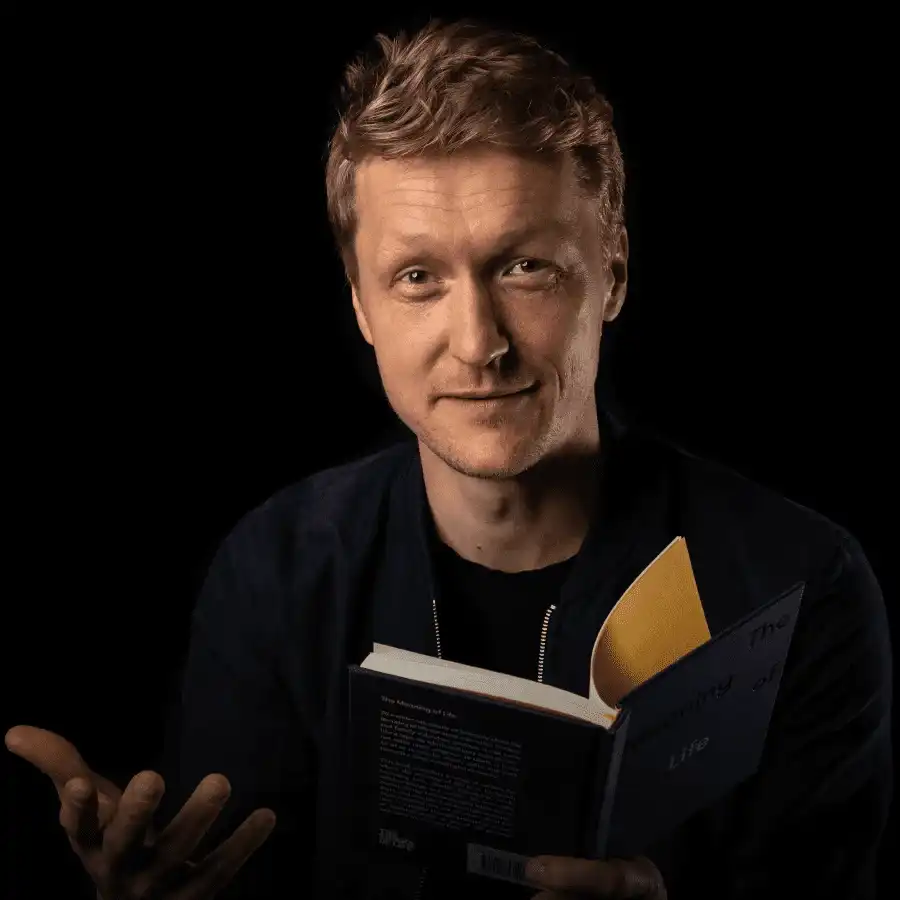
Martin Ebeling
Dr. Martin Ebeling is a philosopher, leadership expert and heads the business program of The School of Life in Germany. He has made a name for himself in the past by helping hundreds of leaders to develop their potential. His experience taught him that success and happiness are the result ofgrowing with your challenges. He is also the author of numerous scientific-philosophical essays.Dealing with Adversity
-
Any life worth living will come with challenges. To avoid them would mean to run away from what gives our life meaning. But how do best approach the challenges we face? How should we respond when we fail to meet them? How can we cope when things get tough? Introducing the surprising findings of modern science and drawing on the ancient wisdom of philosophy, Martin Ebeling offers us practical answers to these questions. We learn the art of proactive thinking, how to embody a growth mindset, discover our secret emotional superpower and get inspired by the wisdom of the stoics. You leave this lecture with a proper understanding of key concepts related to resilience, practical skills to meet your challenges and with one actionable step that you can take right away to live a more meaningful live.
-
During the expert session, Martin Ebeling engages the audience through a reflective exercise using pen and paper, interactive discussions on Stoicism philosophy, and a Q&A session via an online survey. These activities facilitate self-reflection, the exploration of ancient wisdom, and the opportunity to address individual concerns related to stress management and resilience building.
-
- "Shifting Focus for Stress Reduction: Recognizing our innate tendency to create worries and actively moving our focus towards areas of influence can help reduce feelings of stress and anxiety, leading to increased productivity and effectiveness."
- "Reflecting on Challenges: Contemplating past challenges and considering how our lives might have looked if they had unfolded negatively, as well as reflecting on what still supports us and how we cope with difficult situations, can help us cultivate resilience."
- "Embracing Stoicism for Resilience: Adopting the ancient philosophy of Stoicism by focusing our thoughts on future possibilities, preparing ourselves for adversity, and considering resources that can help us deal with challenges can contribute to developing emotional intelligence and wisdom."
-
In this expert session, Martin Ebeling delves into the topic of managing stress and anxiety through the application of the circle of concerns and circle of influences concepts. These circles serve as practical tools for individuals to identify their sources of worry and potential solutions or areas of influence, respectively. According to Martin, humans have an inherent tendency to create problems or concerns that can consume our intellectual and emotional energy. However, by consciously shifting our focus from once circle to the other, we can free up that energy to be more productive and effective in addressing issues.
Martin elaborates on the benefits of these circles when applied in a group or team setting. He emphasizes the importance of having a growth mindset – recognizing our capacity for development through effort and learning – as essential to navigating challenges and growing from hardships. He employs the metaphor of a pearl in an oyster shell to illustrate this idea, where adversity can lead to growth and positive outcomes.
Throughout the presentation, Martin encourages a proactive, problem-solving approach rather than a passive, reactive one. He believes that focusing on what we can control and influence will help us reduce feelings of stress and anxiety. To aid in understanding and implementation, Martin uses visual representations of the two circles.
As the session concludes, Martin reflects on how various influences – including upbringing, friends, teachers, and social context – shape our lives. He emphasizes that while these factors significantly impact us, most were not within our control. To help us cope with difficult situations, Martin encourages introspection: reflecting on our lives' negatives and positives, considering how we have grown from challenges, and contemplating the resources available to us when dealing with adversity.
In a brief departure, Martin introduces Stoicism, an ancient philosophy relevant to cultivating resilience in modern life. Stoics advised focusing on future possibilities and preparing ourselves for adversity, which aligns with the principles of the circle of concerns and circle of influences concepts. Martin invites participants to reflect on challenging scenarios, consider their potential outcomes, and ponder the resources available to help them cope.
-
Wisdom of the Stoics - The ancient philosophy of stoicism has experienced a huge comeback in recent years. The reason is simple: Stoic philosophers knew a variety of techniques that they used to face the vagaries of life and overcome crises. They considered themselves doctors of the soul - and their medicine is as effective today as it was then. In this keynote, we will take a deep dive into Stoic philosophy. After exploring its key tenets and the surprising connections to contemporary research in psychology, we engage in the Stoic art of training our mind to become happier and more resilient.
The Way to a Coaching Culture - Coaching is a crucial skill to develop the potential of individual employees and to inspire a culture of learning and growth in an organization. In this session, we will explore the difference in attitude and practice between managing and coaching someone, explore what lies at the foundation of the relationship between coach and coachee, learn to ask the right questions and get to know a specific coaching technique that we can use to inspire growth in others. Just as important, we will ask when coaching might not be the method of choice and explore ways of spreading the coaching mindset across the entire organization.
